
|
Getting your Trinity Audio player ready...
|
Students often encounter scores like 16/20 grade on tests, quizzes, and assignments. But understanding what these numbers actually mean can be confusing. Converting fractions to percentages helps learners track their academic progress. It helps to set realistic goals. If someone scored 16 out of 20 on a math quiz, knowing the percentage provides clarity about performance levels.
This guide will walk readers through everything they need to know about the 16/20 percentage. From basic conversion methods to letter grade interpretations. By the end, students will have gained confidence in understanding their academic scores.
What is 16/20 as a Percentage?
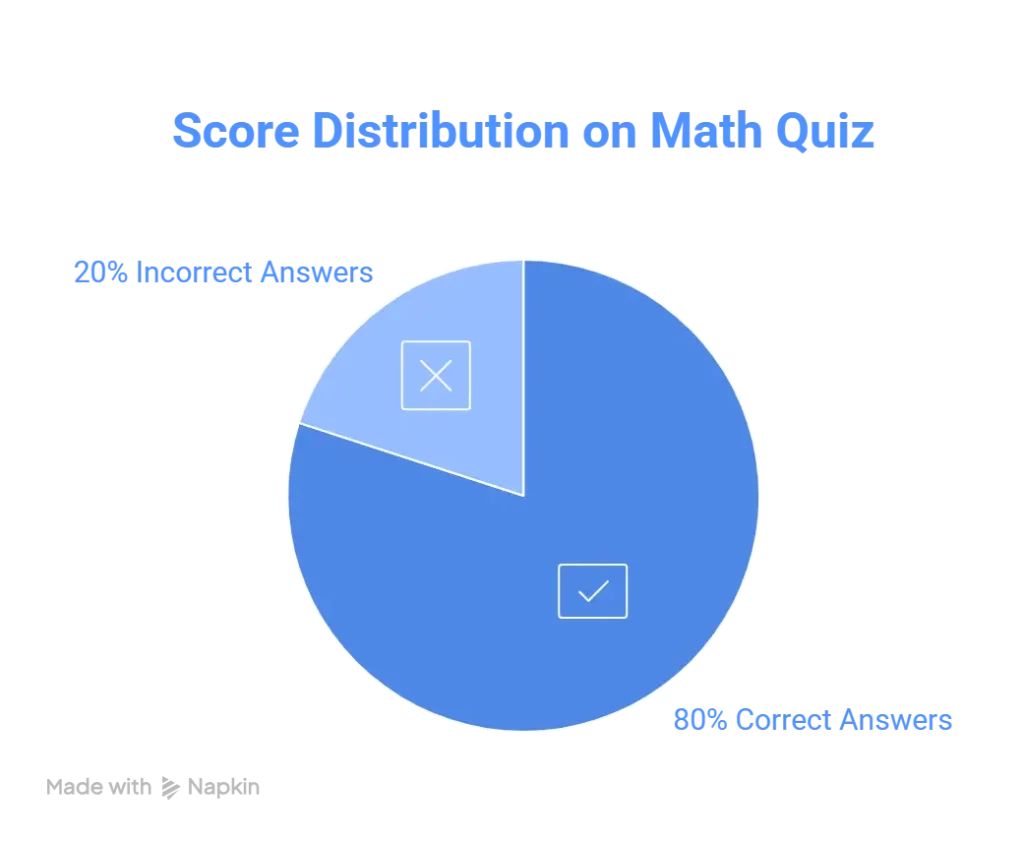
The answer is straightforward: 16 out of 20 as a percentage equals 80%. This conversion indicates that students answered 80% of the questions correctly.
To understand this conversion, think of the fraction 16/20 as “16 parts out of 20 total parts.” When converted to a percentage scale, the result shows what portion of a score was achieved. For students wondering what is 16/20 as a percentage, this 80% figure represents a solid performance in most educational systems.
This matters significantly because percentages provide a universal standard for comparison. Raw scores like a 16/20 score can vary depending on test difficulty. The percentage format allows students, parents, and educators to assess performance quickly.
Understanding 16 Out of 20 Grade
16/20 Letter Grade Explained
In most traditional grading systems, a 16/20 letter grade typically translates to a B or B+. The exact letter grade can vary slightly depending on the institution’s grading scale. Some schools might classify 80% as a B-, while others consider it a solid B.
Here’s how grading systems generally break down:
- 90-100% = A
- 80-89% = B
- 70-79% = C
- 60-69% = D
- Below 60% = F

Since 16 out of 20 percent equals 80%, it falls right at the lower end of the B range in most systems. However, schools using +/- grading might award a B+ for scores between 87-89% and a B- for 80-82%, making the specific letter grade context-dependent.
16/20 Score in Academic Context
A 16/20 grade represents above-average performance in most educational settings. It demonstrates that a student has grasped the majority of the material. It can apply concepts correctly most of the time.
However, whether this score needs improvement depends on individual goals and course requirements. For students aiming for college admissions, consistently scoring 80% might warrant additional study efforts. Conversely, in challenging courses or on difficult exams, 16 out of 20 as a grade could represent excellent achievement.
The key is to view this score in context, considering the course difficulty, personal improvement trends, and academic objectives.
How to Calculate 16 Out of 20 as a Percentage
Step-by-Step Conversion Method
Converting 16 out of 20 in percentage format follows a simple mathematical formula:
Formula: (Points Earned ÷ Total Points) × 100
Here’s the breakdown:
- Divide the points earned by total points: 16 ÷ 20 = 0.8
- Multiply the result by 100: 0.8 × 100 = 80
- Add the percentage symbol: 80%
This method works for any fraction-to-percentage conversion. Whether calculating 16/20 as a percent or any other score, the formula remains consistent and reliable.
Quick Mental Math Tricks
For students who need to calculate 16/20 as a percentage quickly during exams or while checking homework, here are some mental math shortcuts:
Trick 1: Recognize Common Fractions
- 16/20 simplifies to 4/5
- Most students know 1/5 = 20%
- Therefore, 4/5 = 80%
Trick 2: Use the “Out of 10” Method
- Divide both numbers by 2: 16/20 becomes 8/10
- 8/10 is easy to convert: 8 × 10 = 80%
Trick 3: The Multiplication Shortcut
- Recognize that 20 × 5 = 100
- Multiply both the numerator and the denominator by 5
- 16 × 5 = 80, giving 80/100 or 80%
These tricks help students quickly understand their performance without reaching for a calculator every time they receive a score.
16 Out of 20 in Percentage: Common Questions
What is 16/20 as a Grade?
When someone asks, “What is 16/20 as a grade?”, they are seeking the letter grade interpretation. As mentioned earlier, 16/20 as a grade converts to 80%, which usually corresponds to a B letter grade.
In GPA terms, this translates to a 3.0 on a 4.0 scale. Some institutions might calculate it as 3.3 if they use a B+ designation. The exact GPA equivalent depends on the school’s specific conversion chart and whether they use weighted or unweighted GPA calculations.
Different grading systems interpret this score in various ways:
- Standard Scale: B (3.0 GPA)
- Plus/Minus Scale: B or B+ (3.0-3.3 GPA)
- International Systems: May vary significantly
16 Out of 20 Points is What Grade?
For assignments or tests graded on a points-based system, 16 out of 20 points is what grade depends on the total points structure of the course. If this represents one assignment, it’s an 80% or B on that specific task.

However, when calculating final grades, this score’s impact varies based on:
- Weight of the assignment: A heavily weighted test affects the final grade more than a small quiz
- Other scores: Strong performances on other assignments can balance this out
- Extra credit opportunities: May boost the overall percentage
Understanding how points-based grading translates to final letter grades helps students strategize their study efforts and prioritize high-stakes assignments.
16 Out of 20 Letter Grade Variations
Different Grading Scales:
Not all schools use identical grading scales. Some institutions might have stricter standards where 80% falls into a B- category. Some others with more lenient scales might award a B+. Understanding the specific grading scale used by one’s school is essential for accurate interpretation.
International Grading Systems:
Global education systems interpret 16 out of 20 grade quite differently. In some European countries, scoring 16 out of 20 might be considered excellent, while in others, it’s merely satisfactory. For example:
- French system: 16/20 is very good (roughly equivalent to an A-)
- British system: 80% typically corresponds to a first-class honors
- American system: 80% is a standard B grade

College vs. High School Standards:
College courses often have more rigorous grading standards than high school classes. A score that earned an A in high school might only receive a B or C at the university level. Additionally, college professors may curve grades differently, affecting how a raw score translates to a final letter grade.
Practical Examples of 16 Out of 20 as a Grade
Real-World Grading Scenarios:
Imagine a student who took five quizzes in a semester, each worth 20 points. If they scored 16, 18, 17, 19, and 15, their average would be 17 out of 20, or 85% slightly above the 16/20 grade benchmark.
Multiple Test Score Calculations:
When combining multiple scores, students need to calculate weighted averages. If midterms are worth 40% of the final grade and a student scored 16 out of 20 (80%), that contributes 32 percentage points toward the final grade (80% × 0.40 = 32%).
Weighted Grade Applications:
Consider a course where:
- Tests = 50% of the final grade
- Homework = 30% of final grade
- Participation = 20% of the final grade
If a student scores around 80% on tests but excels in homework (95%) and participation (100%). Then their final grade would be approximately 87% turning multiple B grades into an overall B+ or A-.
Tips to Improve Beyond 16/20 Grade
Students satisfied with understanding their current performance but wanting to reach higher achievement levels can implement several strategies:
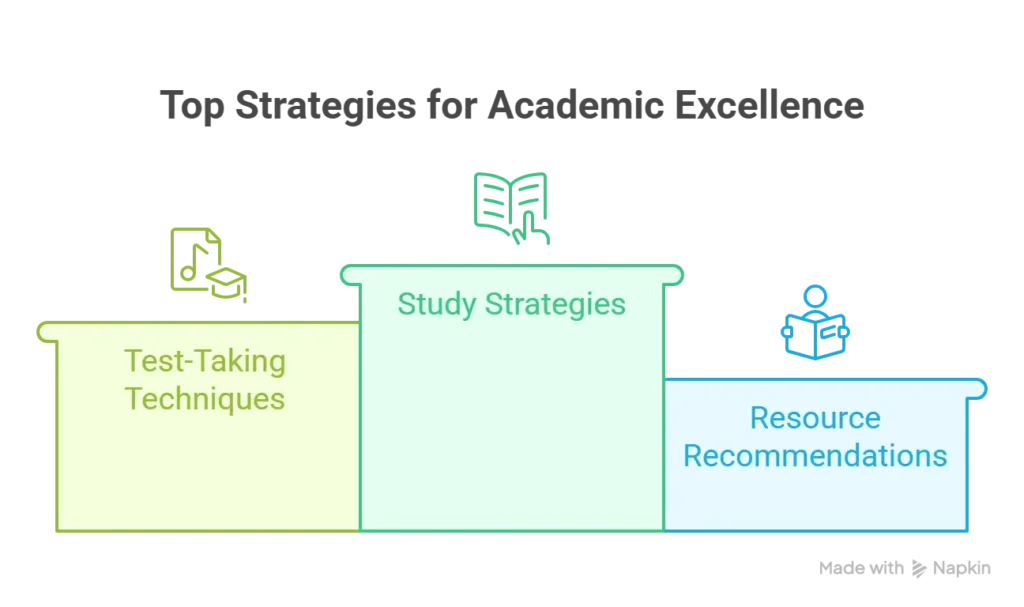
Study Strategies:
- Identify patterns in missed questions to target weak areas
- Create study schedules that allocate more time to challenging subjects
- Form study groups to learn from peers’ strengths
- Use active recall and spaced repetition techniques
Test-Taking Techniques:
- Read questions carefully to avoid careless mistakes
- Budget time wisely across all questions
- Review answers before submitting when possible
- Practice with similar question formats beforehand
Resource Recommendations:
- Utilize online grade calculators to track progress
- Access free educational platforms for additional practice
- Meet with teachers during office hours for personalized guidance
- Explore tutoring options for subjects requiring extra support
Consistent effort and strategic studying can help students move from 80% performance to 90% or higher.
Using Grade Calculators for a 16 Out of 20 Percentage
Benefits of Online Tools:
Modern grade calculators simplify the process of converting scores and tracking academic progress. Students can input their results and see percentage equivalents, letter grades, and GPA.
How to Use Grade Calculators Effectively:
- Enter all assignments with their respective weights
- Input scores as they’re received throughout the semester
- Track trends to identify improvement areas
- Project final grades based on remaining assignments
- Experiment with “what-if” scenarios to see how future scores affect outcomes
Link to Related Tools:
Many educational websites offer free grade calculators designed for students. These tools accept various input formats and provide comprehensive grade analysis.

Using these calculators helps students stay informed about their academic standing. They help make data-driven decisions about where to focus their study efforts.
Conclusion
Understanding 16/20 percentage conversions empowers students to take control of their academic journey. This score of 80% represents solid performance that demonstrates competence.
Students who grasp these conversion principles can more effectively set goals and track their progress. They can communicate with teachers about their performance. Remember that grades are just one measure of learning. The true value lies in understanding concepts and continuously improving.
Take advantage of grade calculators to master score conversions and achieve academic success. Every percentage point gained represents increased knowledge and skill development.
FAQs
What is 16/20 as a percentage?
16/20 as a percentage equals 80%. This is calculated by dividing 16 by 20 to obtain 0.8, and then multiplying by 100 to convert it to a percentage format.
Is 16 out of 20 a good grade?
Yes, 16 out of 20 (80%) is generally considered a good grade. It corresponds to a B letter grade, indicating above-average performance and solid understanding of the material.
How do you convert 16/20 to a letter grade?
First, convert 16/20 to a percentage (80%). Then, apply your institution’s grading scale. In most systems, 80% equals a B grade, though some schools might classify it as B+ or B- depending on their specific scale.
What GPA is 16 out of 20?
16 out of 20 (80%) typically translates to a 3.0 GPA on a 4.0 scale. However, if the school uses plus/minus grading and classifies it as a B+, it might be calculated as a 3.3 GPA.
Can I improve from a 16/20 score?
Absolutely! Students can improve by identifying weak areas, using effective study strategies, practicing regularly, and utilizing resources like tutoring or study groups. Moving from 80% to 90% or higher is achievable with focused effort.







I really like your blog.. very nice colors & theme. Did you create this website
yourself or did you hire someone to do it for you? Plz respond as I’m looking to
construct my own blog and would like to find out where u got this from.
many thanks
Thanks! Yes, I’m a Web Developer and designed/developed blogs & websites myself.